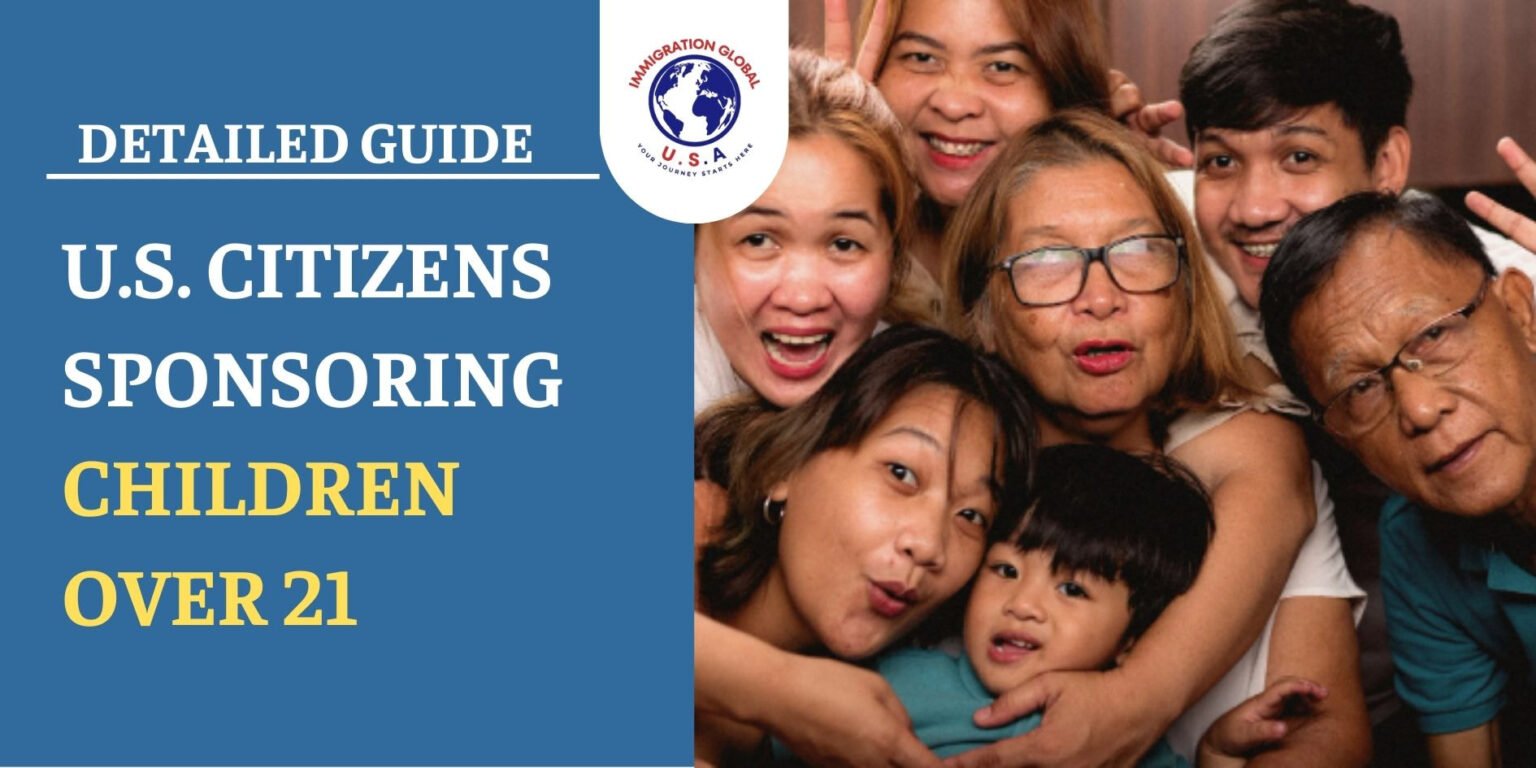

Unlike permanent residents who can only sponsor unmarried children, U.S. citizen parents can sponsor children of any age, whether they are single or married. This is truly a significant advantage!
The sponsorship category depends on the child’s age and marital status. For U.S. citizen parents sponsoring an unmarried child over 21, it falls under the F1 category. If the child is under 21, the category is CR2 or IR2. If the child is married, it falls under the F3 category.
Additionally, the processing times for applications vary significantly depending on the sponsorship category, which can greatly impact the family’s immigration plans.
HOW LONG DOES IT TAKE FOR U.S. CITIZEN PARENTS TO SPONSOR CHILDREN OVER 21?

The processing time for the F1 category can take anywhere from 8 to 9 years. This is due to the limited number of visas available, and to ensure that close relationships are reunited more quickly, the system is divided into priority groups.
For example, if U.S. citizen parents are sponsoring an unmarried child under 21, the time will be much shorter, typically only 1 to 2 years.
If you want to learn more about the sponsorship times for other child sponsorship categories, please refer to the article “Sponsoring Children to the U.S.” We have a summary table of processing times for your easy reference.
REQUIREMENTS TO SPONSOR CHILDREN TO THE U.S. UNDER THE F1 CATEGORY

Before starting the sponsorship journey, parents should determine if they meet all the necessary requirements. Understanding these conditions not only saves time and effort but also ensures that the sponsorship application is processed more smoothly. Here are the important conditions to note:
1. Conditions for the Child:
- Age: The child must be over 21 at the time of application. If the child is under 21, parents can consider the CR2/IR2 category, which has a faster processing time.
- Marital Status: The child must be unmarried.
2. Conditions for the Parent:
- U.S. Citizenship: The sponsoring parent must be a U.S. citizen.
- Financial Evidence: The sponsor needs to show they have the financial ability to support the child while they live in the U.S., ensuring that the child does not become a burden on the government.
3. Conditions for the Relationship:
- Legal Relationship: Documentation proving the relationship between the parent and child is required, such as a birth certificate.
- No Grounds for Denial: The sponsor and the beneficiary must not have any issues that could lead to denial of the application, such as serious criminal offenses or immigration violations. If there are such issues, both parties might consider filing Form I-601 for a waiver to overcome obstacles in the sponsorship process.
APPLICATION PROCESS FOR U.S. CITIZEN PARENTS SPONSORING CHILDREN OVER 21

Once you have understood the requirements for sponsoring a child, parents can start the sponsorship process. This process involves several important steps, from submitting the application to the interview.
To ensure that the child can immigrate to the U.S. legally and quickly. Here are the detailed steps in the sponsorship process for U.S. citizen parents sponsoring children over 21:
1. Prepare the Sponsorship Application
First, parents can begin by preparing the sponsorship application for their child. To save time and reduce the chance of errors, refer to the section on “Sponsorship documents” below.
2. Submit the Sponsorship Application to USCIS
- Complete and Submit Form I-130: The sponsoring parent (U.S. citizen) must complete Form I-130 (Petition for Alien Relative) and submit it to USCIS along with any required documents.
- Pay the Fees: You can check the fees that need to be paid on the USCIS Fee Schedule page.
3. Receive Notification from USCIS
- Wait for Processing: After submitting the application, USCIS will review it and send a notification about the result, which can take several months to over a year.
- Approval Notice: If approved, USCIS will send Form I-797, which is the approval notice.
4. Transfer the Application to the National Visa Center (NVC)
- Forward the Application: After USCIS approval, the application will be sent to the NVC.
- Receive Notification from NVC: The NVC will send a notification along with the case number and further instructions.
5. Pay Fees and Complete the Application
- Pay Fees: The sponsor needs to pay any required fees through the NVC online system.
- Submit Required Documents: Provide additional documents, including Form DS-260 (Visa Application), financial documents, and proof of relationship.
6. Receive Interview Notification
The NVC will schedule an interview at the U.S. Embassy or Consulate and notify both the sponsor and the child about the time and location.
7. Health Examination and Vaccinations
The child must complete a health examination and vaccinations as required to qualify for the visa.
8. Prepare for and Attend the Interview
- Prepare for the Interview: Both parties should prepare the necessary documents to bring to the interview.
- Interview: The child will be asked about their relationship with the sponsor and other personal information.
9. Receive Visa and Enter the U.S.
- Visa Issuance: If the interview is successful, your child will receive an F1 visa. The NVC will send the visa and necessary documents for entry.
- Entry into the U.S.: Upon arrival in the U.S., the child will present the visa and documents at the port of entry. After that, the child will become a permanent resident and have the right to live in the U.S.
Note: If the child is already living in the U.S. After the I-130 application is approved, parents need to file Form I-485 for the child to adjust their status from temporary to permanent resident.
SPONSORSHIP APPLICATION FOR U.S. CITIZEN PARENTS SPONSORING CHILDREN OVER 21


1. Can an unmarried child over 21 apply for another type of visa?
If an unmarried child over 21 does not qualify for the F1 category, they can consider other visa types, such as a work visa or a student visa.
2. Can parents sponsor multiple unmarried children at the same time?
Yes, parents can submit sponsorship applications for multiple unmarried children, but each application must be submitted separately with corresponding fees.
3. Does having a child affect the sponsorship process for an unmarried child?
Having a child does not affect the sponsorship process, but it is important to clearly provide that information in the application.
4. Can U.S. citizen parents sponsor a married child?
Yes, U.S. citizen parents can sponsor a married child, but it will be under the F3 category, which has different requirements and processing times.
5. What happens if an unmarried child gets married during the waiting period?
If they get married, the child will no longer qualify for the F1 category and can apply for sponsorship under the F3 category.
CONCLUSION
We have covered essential information about U.S. citizen parents sponsoring unmarried children over 21 under the F1 category. We hope this information helps you better understand the process and requirements needed.
If you want to learn more about other cases related to sponsoring children, check out the following articles:
- Green card holders sponsoring unmarried children under 21 (F2A)
- Green card holders sponsoring unmarried children over 21 (F2B)
- U.S. citizens sponsoring married children (F3)
- U.S. citizens sponsoring unmarried children under 21 (CR2/IR2)
If you have any questions, please contact us:
📧 Email: immglobal2002@gmail.com
📞 Phone: 0942 675 567
As attorneys at Immigration Global, we are committed to addressing your situation and needs with our legal knowledge and experience. Let us accompany you on your journey to the American dream!